
Packing Glassware Safely: A Complete Guide for Moving House
Moving house involves packing many fragile belongings, but glasses, crystal, mugs and decorative glassware need particular attention. Even a short journey can expose poorly packed items to vibration, pressure and sudden movement inside a moving vehicle.
Understanding packing glassware safely can greatly reduce the risk of chips, cracks and breakage. The safest approach combines strong boxes, individual wrapping, proper cushioning, sensible positioning and clear labelling.
You do not need an overly complicated system. Careful preparation and the right packing materials usually make the biggest difference.
At Coxs Movers & Storage Ltd, organised packing forms an important part of a well-planned move. Whether you pack your belongings yourself or arrange professional moving support, protecting fragile items properly can make moving day less stressful and unpacking much easier.

What Do You Need for Packing Glassware Safely?
Choose Suitable Packing Materials Before You Start
Prepare all your materials before handling fragile glassware. You will usually need strong small or medium boxes, packing paper, bubble wrap, cardboard dividers, quality tape, marker pens and fragile labels. You can also use clean towels or linens for extra cushioning around certain items or to fill suitable spaces.
Strong boxes matter because weakened cardboard may bend or collapse during lifting. Choose cartons that remain dry, rigid and free from tears.
Packing paper works well for individual wrapping and gap filling. Bubble wrap can add another protective layer around valuable or particularly delicate pieces.
Cardboard dividers provide separate compartments and can work especially well for wine glasses, tumblers and similar items.
Step-by-Step Guide to Packing Glassware Safely
Step 1: Sort Your Glassware Before Packing
Group your glassware according to size, type and fragility before you start wrapping. Keep everyday tumblers separate from stemmed wine glasses, champagne flutes, crystal pieces and decorative items. This approach helps you choose the right box and level of protection for each group instead of treating every glass in exactly the same way.
Inspect each item for existing cracks, scratches or chips. Knowing its condition before packing helps you avoid confusing old damage with damage discovered after the move.
You may also want to identify the glasses you will need immediately after arriving so you can pack them in an easily accessible box.
Step 2: Select a Strong Box
Use small or medium cartons rather than oversized moving boxes. Glassware can become surprisingly heavy when you pack many items together, and very large cartons may become difficult to lift safely.
Check every box before use. Avoid cartons with damp areas, crushed corners, torn seams or weak bottoms.
Reinforce the base with strong packing tape, particularly along the centre seam and edges. A secure base reduces the chance of the box opening when someone lifts it.
Step 3: Create a Cushioned Base
Place a protective layer across the bottom of the carton before adding any glassware. Use several sheets of loosely crumpled packing paper, folded towels or another suitable cushioning material.
The layer should absorb small impacts without reducing the usable space too much.
Pay particular attention to the corners because direct contact between a glass and the rigid bottom or side of a box can increase the chance of damage.
Never place wrapped glasses directly onto an unprotected carton base.
Step 4: Wrap Every Glass Individually
Individual wrapping remains one of the most important rules for packing glassware safely. Place each glass on several sheets of packing paper and roll or fold the paper around the entire item.
Tuck paper gently into open areas where appropriate without applying unnecessary pressure.
The wrapping should protect rims, bases, handles and decorative edges while preventing bare glass surfaces from touching other objects.
For delicate or expensive glassware, place bubble wrap around the paper-wrapped item for additional cushioning. Secure it gently without tightening the material against fragile sections.
Step 5: Give Stemware Extra Protection
Wine glasses, champagne flutes and other stemware require additional attention because thin stems can break under relatively small amounts of sideways pressure.
Start by wrapping the stem gently. Then protect the bowl, rim and base before wrapping the complete glass as one item.
Avoid wrapping the stem so tightly that you place pressure on it.
Do not use the empty space inside a wine glass to store small heavy objects. Any added internal pressure or movement can damage the bowl.
Step 6: Use Cardboard Dividers When Suitable
Cardboard dividers create individual cells inside a moving box and prevent neighbouring glasses from striking one another. They work particularly well when you pack similar glasses of comparable dimensions.
Place a wrapped glass inside each compartment and add paper around any loose areas if required.
Dividers do not replace individual wrapping. They provide another layer of separation rather than complete protection on their own.
If you do not have dividers, use enough packing material to create safe separation between individual pieces.
Step 7: Arrange Glassware Carefully Inside the Box
Place stronger and slightly heavier items toward the lower part of the box while keeping lighter and more delicate pieces higher.
Avoid placing heavy household items on top of fragile glasses.
Many standard glasses can travel upright when you wrap and cushion them properly. However, glassware varies widely in shape and strength, so choose the most stable position for each item rather than following a single rule blindly.
Never force a glass into a space that feels too tight.
Step 8: Fill Empty Spaces
Movement causes many packing problems. If glasses can shift, knock together or strike the carton wall during transport, the risk of breakage rises.
Fill gaps with loosely crumpled packing paper, soft protective material or suitable towels.
Check the spaces between items, around dividers and near the box corners.
Aim for stability rather than compression. Packing material should prevent movement without squeezing fragile glassware tightly.
After filling the gaps, gently move the carton. If you hear rattling, open it and add more cushioning before sealing it.
Step 9: Add Protection Across the Top
Finish the box with another cushioning layer above the final row of glassware.
The top layer protects the contents from contact with the carton flaps and provides additional stability when someone handles the box.
You should be able to close the flaps without pressing them firmly against the contents.
If you need to force the carton closed, remove one or more items and use another box. Overpacking creates pressure and can damage fragile pieces even before the move begins.
Step 10: Seal and Label the Box Clearly
Seal all box seams securely with quality packing tape. Write FRAGILE – GLASSWARE in large lettering on at least two vertical sides.
Add THIS SIDE UP where maintaining orientation matters.
You can also include the destination room, such as Kitchen, Dining Room or Living Room, to help your moving team place the carton correctly.
Clear labels support careful organisation, although they should always work alongside proper packing rather than replace it.
How to Pack Wine Glasses Safely
Protect the Stem, Bowl, Rim and Base
Wine glasses need careful packing because their thin stems and delicate bowls can break under sideways pressure. Wrap the stem gently first, then protect the bowl and rim before covering the complete glass.
Use cardboard cell dividers whenever practical and place only one protected glass in each compartment.
Add cushioning around loose areas so individual pieces remain stable.
For fine crystal, antique stemware or sentimental pieces, use extra protective layers and consider placing fewer items in each carton to keep weight and pressure under control.
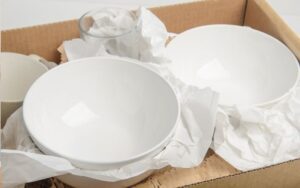
How to Pack Crystal Glassware
Use Extra Protection for Valuable and Delicate Pieces
Crystal pieces often require more protection than everyday drinking glasses because their shape, thin edges or decorative details may create vulnerable areas.
Wrap each piece with soft packing paper first. Add bubble wrap around the outside where necessary and avoid allowing adhesive tape to touch the glass directly.
Use a strong box with generous cushioning on every side.
If you own particularly valuable, antique or irreplaceable glassware, discuss professional packing options with your moving company before moving day.
Common Glassware Packing Mistakes to Avoid
Avoid Oversized or Damaged Boxes
Large cartons encourage overpacking and can become extremely heavy. Damaged boxes may also lose their strength when lifted.
Choose smaller strong cartons that you can carry comfortably.
Never use boxes with damp cardboard, weak seams or crushed bases for fragile belongings. Strong packaging provides the foundation for every other protective step you take.
Never Skip Individual Wrapping
Placing several bare glasses together creates direct glass-to-glass contact. Even small movements can cause chips, scratches or cracks.
Wrap every item separately before placing it into a carton.
Dividers, towels or additional cushioning can improve protection, but they should not replace individual wrapping for fragile pieces.
Do Not Leave Empty Gaps
Empty spaces allow items to slide or collide during lifting, braking or turning.
Once you arrange the glassware, fill the remaining gaps carefully.
Conduct a gentle movement test before sealing the box. You should not hear obvious rattling.
If the contents move, add cushioning until the items remain stable without experiencing excessive pressure.
Avoid Overpacking the Carton
Fitting one extra glass into an already full carton may seem efficient, but overcrowding can create harmful pressure around fragile items.
Use another box instead.
You should have enough space for protective wrapping and top cushioning while still allowing the flaps to close naturally.
Several manageable boxes usually offer better protection than one overloaded carton.
Practical Tips for Packing Glassware Safely
Keep Similar Items Together
Packing similar items together makes it easier to choose suitable box sizes, dividers and protective materials. Place tumblers with other tumblers and stemware with similar stemware where practical.
Avoid combining fragile glasses with tools, tins, heavy cookware or other objects that could shift and create strong impact during transportation.
Keep each carton balanced and manageable.
Create a Glassware Inventory
If you own valuable crystal, large collections or sentimental items, make a simple inventory before packing.
Record the number and general type of pieces in each box.
You can also photograph valuable glassware before wrapping it. Photos create a useful record of condition and help you remember which items belong in each carton.
Number the boxes so you can identify them quickly during unpacking.
Keep Essential Glassware Accessible
You may want a few mugs, glasses or everyday kitchen items immediately after arriving at your new home.
Pack these items separately and mark the carton OPEN FIRST or KITCHEN ESSENTIALS.
Keeping a small essentials box prevents you from searching through several fragile cartons after a long moving day.
Make sure you still wrap every glass safely, even when you expect to open the box quickly.
How to Carry and Transport Glassware Boxes
Handle Fragile Cartons With Controlled Movements
Lift glassware cartons from underneath instead of pulling them by their flaps or tape.
Carry each box steadily and avoid dropping, sliding or throwing it.
During vehicle loading, place fragile cartons in a stable position where heavy furniture and boxes cannot fall onto them.
Avoid putting very heavy cartons directly above glassware.
Clear communication with the moving team also matters. Point out particularly valuable or delicate boxes before loading begins.
How Coxs Movers & Storage Ltd Can Help
Professional Support Can Simplify Fragile Packing
Packing an entire kitchen or large glassware collection can take considerable time. Professional moving support can help customers manage packing, loading, transportation, storage and unloading more efficiently.
Coxs Movers & Storage Ltd can support different types of household moves while helping customers plan around fragile belongings, furniture and other possessions requiring careful handling.
Tell the team about delicate items, access restrictions and special requirements before the move so everyone can prepare appropriately.
Why People Trust Coxs Movers & Storage Ltd
Careful Planning Builds Confidence
Customers want clear communication and careful treatment when they trust a moving company with household belongings.
A reliable moving process begins before the vehicle arrives. Good packing, sensible labelling, appropriate equipment and clear instructions all contribute to an organised move.
Coxs Movers & Storage Ltd focuses on practical moving and storage support based on each customer’s requirements.
When customers and movers communicate clearly about fragile possessions, both sides can plan the process more effectively.
Frequently Asked Questions
1. What Is the Safest Way to Pack Glassware for Moving?
Wrap every glass individually, protect the carton base, separate pieces and fill empty spaces so nothing moves. Add top cushioning before sealing the box. Use cardboard dividers for suitable stemware and similar glasses. Keep boxes manageable rather than overly heavy, then label several sides clearly with FRAGILE and the destination room.
2. Should Glasses Be Packed Upright or Sideways?
Many drinking glasses can travel safely in an upright position when you wrap, separate and cushion them properly. However, the safest position depends on each glass’s shape and design. Focus on preventing movement and pressure rather than relying only on orientation. Never place unwrapped glasses together regardless of their position.
3. Can I Use Towels Instead of Packing Paper?
Clean towels, linens and other soft fabrics can provide useful cushioning and help fill spaces inside cartons. However, bulky fabrics may create uneven pressure around delicate glassware. Packing paper generally provides more consistent wrapping. Use towels as additional cushioning where appropriate and make sure all fabrics remain clean, dry and free from hard objects.
4. How Do I Pack Wine Glasses Without Breaking Them?
Protect the stem first, then wrap the bowl, rim and base before wrapping the complete glass. Place each glass in a separate divider compartment where possible. Add cushioning around every loose area and keep the carton reasonably light. Valuable crystal wine glasses may benefit from extra wrapping or professional packing assistance.
5. How Can I Prevent Glassware From Breaking During a House Move?
Reduce movement as much as possible. Use strong cartons, wrap each item separately, cushion the bottom and top, fill every gap and avoid overcrowding. Keep heavy objects away from fragile glassware and label each box clearly. Gentle handling and stable vehicle placement also play important roles in reducing the risk of damage.
Final Thoughts
Packing glassware safely depends on preparation rather than speed. Strong boxes, individual wrapping, proper cushioning and careful positioning can greatly reduce unnecessary movement and protect fragile belongings during a house move.
Start by sorting your glassware and choosing suitable packing materials. Protect every piece individually, paying particular attention to stems, rims, handles and decorative sections. Use dividers where they help, fill all empty spaces and avoid overloading cartons.
Before sealing each box, perform a gentle movement check. If you hear rattling, add more cushioning.
Clear labels and sensible handling also support safer transportation. Mark fragile cartons prominently and tell your moving team about valuable, delicate or sentimental items before loading begins.
If you have a large collection of glassware, limited packing time or particularly valuable pieces, professional assistance can make the process easier to manage.
With thoughtful preparation and the correct packing techniques, you can give your glasses, crystal and other fragile household items a much better chance of arriving at your new home safely.
Call to Action
 Call: Wigan: 01942 834 980
 Website: Coxs Movers & Storage Ltd
 Get a Free Quote Today
Coxs Movers & Storage Ltd — Manchester’s trusted name in removals.
Get Coxs Movers & Storage Ltd.’s Best Services