
Piano Moving Advice: How to Move a Piano Safely
Moving a piano requires far more planning than moving ordinary furniture. Pianos combine considerable weight with delicate internal mechanisms, polished finishes and awkward shapes. A rushed move can damage the instrument, flooring, walls, staircases or door frames. More importantly, poor lifting techniques can cause serious personal injury.
Whether you own an upright piano, baby grand or grand piano, you should plan the journey carefully before anyone attempts to lift or reposition it. The safest approach depends on the piano’s size, weight, access route, destination, number of steps and available moving equipment.
This detailed piano moving advice explains how to prepare the instrument, protect your property, plan the route and transport the piano with greater control. For challenging moves, Coxs Movers & Storage Ltd can provide practical removal support and help customers plan the physical transportation of heavy household items.

Why Does Moving a Piano Require Special Care?
Pianos Combine Heavy Weight With Delicate Components
A piano may look strong from the outside, but its internal structure includes strings, keys, hammers, pedals and other finely balanced parts. Sudden impacts, uncontrolled tilting or poor handling can affect the instrument. Movers therefore need to control both the weight and the movement of the piano from start to finish.
The Weight Does Not Always Feel Balanced
Pianos do not distribute their weight like ordinary cabinets or tables. Some sections carry more weight than others, which can make lifting and turning unpredictable. A piano may also become difficult to control when movers need to change direction through a narrow doorway, hallway or staircase.
Access Conditions Can Change the Entire Moving Plan
A simple ground-floor move may require a very different approach from a move involving steps, sharp corners or narrow landings. Professional movers normally consider the piano dimensions, route width, flooring, outdoor access, vehicle position, weather and lifting points before deciding how to move the instrument.
Step 1: Inspect and Measure the Entire Moving Route
Measure Doorways, Corridors and Tight Corners
Start by measuring the piano and every narrow section between its current position and the removal vehicle. Check door widths, hallway dimensions, corners and ceiling height. Do not assume that a piano will fit simply because other large furniture passed through the same route.
Examine Staircases Carefully
Stairs create one of the greatest challenges during a piano move. Check the width, number of steps, turns, landing space and handrails. Consider whether the team can maintain control throughout the route. If the staircase looks too narrow or complex, arrange professional assessment rather than attempting an improvised move.
Inspect the Destination Before Moving Day
Measure the route at the new property as carefully as the route at the current address. Decide where the piano will sit before transportation begins. This prevents unnecessary repositioning after delivery and helps the moving team carry the instrument directly toward its final location.
Step 2: Prepare the Piano Before Moving
Remove Loose Items Around the Instrument
Clear decorations, music books, stools, lamps and other loose objects from the piano and surrounding area. Movers need clear working space around the instrument. Removing unnecessary items also reduces the chance of objects falling, scratching the piano or causing someone to trip during lifting.
Secure the Keyboard and Moving Parts
Close the keyboard cover carefully and secure it when the design allows. Do not use methods that could damage the finish. If the piano includes removable or particularly delicate components, ask an experienced mover or piano specialist how to prepare them correctly before transportation.
Do Not Place Boxes on the Piano
Avoid treating the piano as a temporary packing surface. Heavy boxes or tools can scratch the finish, damage the lid or fall while the instrument moves. Keep the top of the piano clear and protect the entire exterior before the lifting process begins.
Step 3: Protect the Piano Properly
Use Protective Moving Blankets
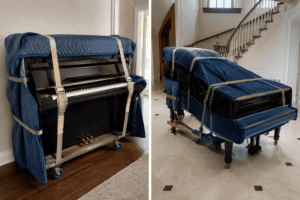
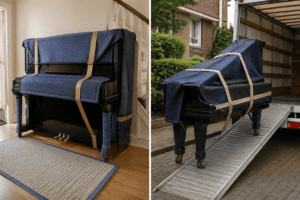
Cover the piano with suitable furniture blankets or protective padding. Secure the protection so it does not slip during movement, but avoid placing excessive pressure on delicate surfaces. Good padding reduces the risk of scratches when the instrument passes close to doors, walls or other furniture.
Protect Corners and Vulnerable Areas
Corners can easily strike walls and door frames during turns. Give extra attention to exposed edges and polished surfaces. The protection should stay in position while still allowing movers to maintain a secure grip on the instrument and lifting equipment.
Step 4: Protect Floors, Walls and Door Frames
Cover Vulnerable Flooring Before the Move
Heavy pianos can mark wooden floors, laminate, tiles and other surfaces. Protect the route before moving begins. Suitable coverings can reduce scratches, dirt and accidental damage. Movers should avoid dragging the piano directly across flooring, even when the distance appears short.
Create Enough Clearance Around Doorways
Door frames and walls often suffer damage during heavy furniture moves because the team has too little room to turn safely. Remove manageable obstacles in advance and protect vulnerable surfaces when necessary. Slow, controlled movements provide far greater safety than trying to force the piano through.
Step 5: Use the Right Piano Moving Equipment
Choose Equipment That Matches the Piano
Professional movers may use piano dollies, moving boards, heavy-duty straps, blankets, padding, ramps and other handling equipment. The exact equipment depends on the piano type, its weight and the property layout. A grand piano may require a different preparation method from an upright piano.
Do Not Rely on Ordinary Furniture Equipment
Equipment designed for light household furniture may not provide enough strength or stability for a heavy piano. Improvised straps, weak trolleys or unsuitable ramps can increase the risk of losing control. Choose equipment according to the real weight and access conditions of the instrument.
Step 6: Use Enough People for the Job
Never Attempt a Heavy Piano Move Alone
One person should not try to move a large piano without appropriate professional equipment and experience. Even small pianos can weigh significantly more than they appear. A sudden shift in weight can cause severe back, hand, foot or leg injuries.
Assign One Person to Coordinate Movement
Clear communication helps every team member lift, stop, turn and lower at the same time. One experienced person should coordinate the process whenever possible. This approach reduces sudden movements and prevents individuals from reacting in different directions while supporting a very heavy object.
Step 7: Take Extra Care on Stairs
Move Slowly and Maintain Control
Never rush a piano upstairs or downstairs. The angle of the staircase changes how the weight feels, and a small loss of control can quickly create a dangerous situation. Movers should agree on every movement before advancing to the next step.
Assess Difficult Stairs Before Starting
Spiral stairs, narrow landings, sharp turns and restricted ceiling heights can make standard carrying methods unsuitable. In complicated situations, experienced movers may recommend specialist equipment or a different access method. Do not force the instrument through a route that does not provide adequate working space.
Step 8: Prepare Outdoor Access and Vehicle Position
Keep the Path Clear and Stable
Inspect the path between the property and removal vehicle. Remove bins, garden furniture, loose items and other obstacles. Uneven paving, gravel, wet surfaces or steep slopes may affect the way movers control the piano, so identify these issues before transportation begins.
Position the Vehicle as Close as Practical
A shorter carrying route reduces the time that movers need to control the piano outdoors. Where legal and practical, arrange suitable vehicle access in advance. Consider parking restrictions, narrow streets or shared driveways that could affect loading.
Step 9: Secure the Piano Inside the Removal Vehicle
Prevent Movement During the Journey
Once the piano enters the vehicle, movers should secure it properly so it cannot roll, slide or shift during braking and turning. Suitable restraints and positioning protect both the piano and nearby furniture from impact during transportation.
Keep Heavy Furniture Away From the Piano
Do not allow cabinets, boxes or other heavy objects to fall or move against the instrument. Arrange the vehicle load carefully so the piano remains protected throughout the journey. The loading plan matters just as much as the lifting process.
Protect the Piano From Weather
Rain and excessive moisture can damage the finish and may affect parts of the instrument. Plan loading and unloading carefully in poor weather and use appropriate protection. Avoid leaving the piano exposed outdoors while the rest of the vehicle gets organised.
Step 10: Place the Piano Carefully at the New Property
Move Directly Toward the Final Position
A clear floor plan can reduce unnecessary movement after delivery. Guide the moving team toward the agreed room and final area wherever possible. Repeatedly repositioning a heavy piano adds effort and increases the risk of damage.
Check the Piano After Delivery
Inspect the exterior once the protective materials come off. Look for visible scratches, damage or movement issues. A piano may also need time to settle after relocation before tuning, particularly when temperature or humidity conditions differ between properties.
Practical Piano Moving Advice
Follow These Essential Safety Tips
Use these practical tips to reduce unnecessary risks:
- Measure the piano and full moving route.
- Check staircases before moving day.
- Clear obstacles from indoor and outdoor paths.
- Protect the keyboard and polished surfaces.
- Use strong moving blankets and padding.
- Protect vulnerable flooring.
- Never drag the piano across the floor.
- Use equipment designed for heavy items.
- Use enough experienced people.
- Assign one person to coordinate movements.
- Move slowly around corners and stairs.
- Secure the piano correctly inside the vehicle.
- Keep other furniture away from the instrument.
- Protect the piano from rain and moisture.
- Plan its final position before delivery.
A few extra minutes of preparation can prevent expensive damage and dangerous mistakes.
Common Piano Moving Mistakes to Avoid
Trying to Save Time by Dragging the Piano
Dragging may seem easier than lifting or using suitable equipment, but it can damage casters, legs, flooring and the piano itself. The weight may also shift unexpectedly. Use controlled equipment and planned movements instead of relying on force.
Underestimating the Weight
Many people assume that several strong friends can move a piano safely. Strength alone does not solve balance, turning, stairs or grip problems. Experience, communication and suitable moving equipment play equally important roles during heavy-item transportation.
Starting Before Measuring the Route
Discovering that a doorway is too narrow after the team has already lifted the piano creates unnecessary risk. Complete all measurements first. Remove manageable doors or obstacles before lifting begins when appropriate and safe.
How Can Professional Piano Movers Help?
They Assess the Route Before Lifting
Experienced movers can identify narrow access, awkward stairs, unsuitable surfaces and difficult loading areas before moving the piano. This preparation allows the team to choose appropriate equipment and plan each stage rather than solving problems while carrying the instrument.
They Reduce Physical Strain and Risk
Moving a piano involves significant weight and awkward lifting positions. Professional assistance reduces the physical burden on homeowners and helps prevent unsafe DIY lifting. Experienced movers also understand how to coordinate movements through difficult spaces.
They Can Plan the Piano With the Wider House Move
If you are moving other furniture and belongings at the same time, the piano should fit into the wider loading plan. Movers can determine when the instrument should leave the property, where it should sit in the vehicle and when it should enter the new home.
When Should You Hire Professional Piano Movers?
Choose Professional Help for Difficult Access
Professional assistance makes particular sense when the piano must travel upstairs or downstairs, pass through narrow doorways, navigate sharp turns or move across difficult outdoor access. Each additional obstacle increases the need for experience and careful planning.
Consider the Piano’s Value
Financial value matters, but sentimental value can matter just as much. Family pianos may carry decades of personal history. If damage would cause significant financial or emotional loss, professional handling offers a more sensible approach than an inexperienced DIY move.
Long-Distance Moves Need Additional Planning
Long journeys require secure vehicle positioning, proper restraints and protection from other loads. Movers must also consider loading, unloading and destination access. Discuss the full journey before booking rather than focusing only on removing the piano from its current room.
Why Choose Coxs Movers & Storage Ltd?
Practical Planning for Heavy Household Items
Coxs Movers & Storage Ltd understands that heavy-item removals require organisation before lifting begins. Customers can discuss the piano, property access, stairs, route conditions and other household moving requirements before the scheduled move.
Careful Handling and Clear Communication
A successful move depends on understanding what needs to move and what challenges the property presents. We focus on practical communication and organised handling so customers know how the physical relocation will fit into their wider moving plans.
Support for Complete Household Relocations
Customers often need to move more than one difficult item. A piano may form part of a larger home relocation involving furniture, boxes and other belongings. Coordinating everything under one moving plan can create a smoother and more organised moving day.
Why People Trust Us
Respect for Property and Personal Belongings
Customers expect movers to respect both their possessions and their property. Careful planning helps protect flooring, walls, door frames and furniture while heavy items move through the building. This attention becomes particularly important when handling a piano.
Realistic Planning Instead of Assumptions
Every piano move differs. Instrument size, stairs, parking, building access and destination conditions can change the best moving method. A responsible approach starts with understanding those details and planning accordingly rather than assuming every piano requires the same process.
Frequently Asked Questions
1. Can I Move a Piano Myself?
Moving a piano yourself can create significant risks because pianos combine heavy weight with awkward balance. Stairs and tight corners make the process even harder. Without suitable equipment and experience, you could damage the instrument or property and injure yourself. Professional help usually offers the safer option.
2. How Should I Prepare a Piano Before Moving?
Clear the surrounding area, remove loose items and close the keyboard cover. Protect the instrument with suitable blankets and padding. Measure every doorway, hallway and staircase before lifting. Protect floors where necessary and plan the exact route to the removal vehicle.
3. Can a Piano Be Moved Upstairs?
Yes, movers can often move pianos upstairs, but they must assess the staircase first. Width, turns, landings, ceiling height and piano dimensions all matter. Complex staircases may require specialist equipment or alternative methods. Never force a piano through an unsafe route.
4. Does a Piano Need Special Moving Equipment?
Most piano moves require suitable heavy-duty equipment. Movers may use dollies, moving boards, straps, blankets, ramps and protective padding. The correct equipment depends on the piano type and property. Appropriate equipment improves control and reduces the risk of accidental damage.
5. Should I Hire Professional Piano Movers?
Professional movers make sense when a piano is heavy, valuable or difficult to access. They can assess the route, select suitable equipment and coordinate the lifting and transport process. Professional help becomes especially useful when the move includes stairs, narrow spaces or long-distance transportation.
Final Piano Moving Advice
The most important piano moving advice is simple: plan every stage before anyone lifts the instrument. Measure the route, identify access problems, protect the piano and surrounding property, choose appropriate equipment and use enough experienced people to maintain control.
Never treat a piano like an ordinary cabinet. Its weight, shape and delicate internal components require additional care. Stairs, narrow entrances, uneven outdoor paths and long journeys can make the move even more demanding.
If any part of the route looks difficult or unsafe, avoid improvising. Professional assistance can reduce the risk of personal injury and expensive damage.
Coxs Movers & Storage Ltd can help customers organise the physical side of piano and household relocations. With careful preparation, controlled handling and a well-planned transport route, you can make the move safer, smoother and far less stressful.
Call to Action
 Call: Wigan: 01942 834 980
 Website: Coxs Movers & Storage Ltd
 Get a Free Quote Today
Coxs Movers & Storage Ltd — Manchester’s trusted name in removals.
Get Coxs Movers & Storage Ltd.’s Best Services